For decades, latex has always been one of the most important materials to produce medical gloves. Despite the growing popularity of Nitrile gloves, Latex is still chosen by many hospitals, clinics, and businesses due to its superior elasticity, good grip, and affordable price.
If you are learning what Latex is, the advantages of Latex gloves or should you choose Latex or Nitrile, this article will help you have a comprehensive view.
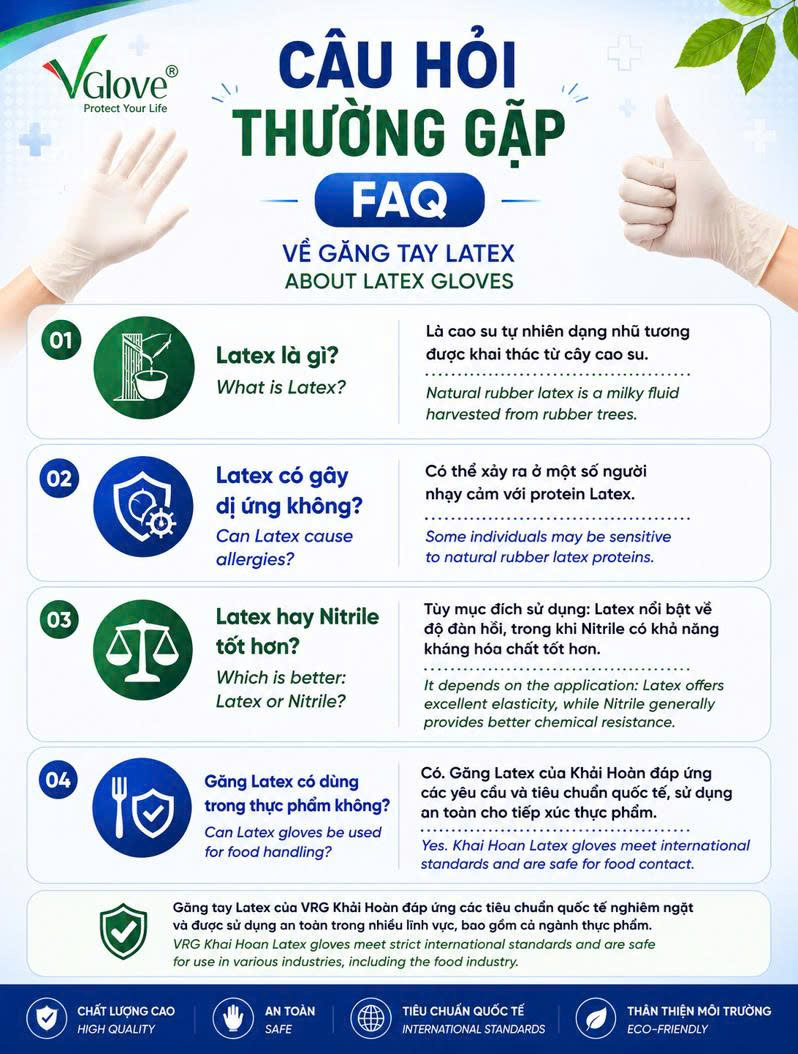
What is Latex?
Latex (Natural Rubber Latex) is the sap of rubber trees extracted from natural rubber trees. After harvesting, Latex is processed to stabilize, filter impurities, and put into production elastic products such as medical gloves, rubber tubes, and many other medical devices.
The highlight of Latex is its flexibility, softness, and tight fit to the hand, helping users to operate precisely in tasks that require sophistication. There is also environmentally friendly biodegradability.
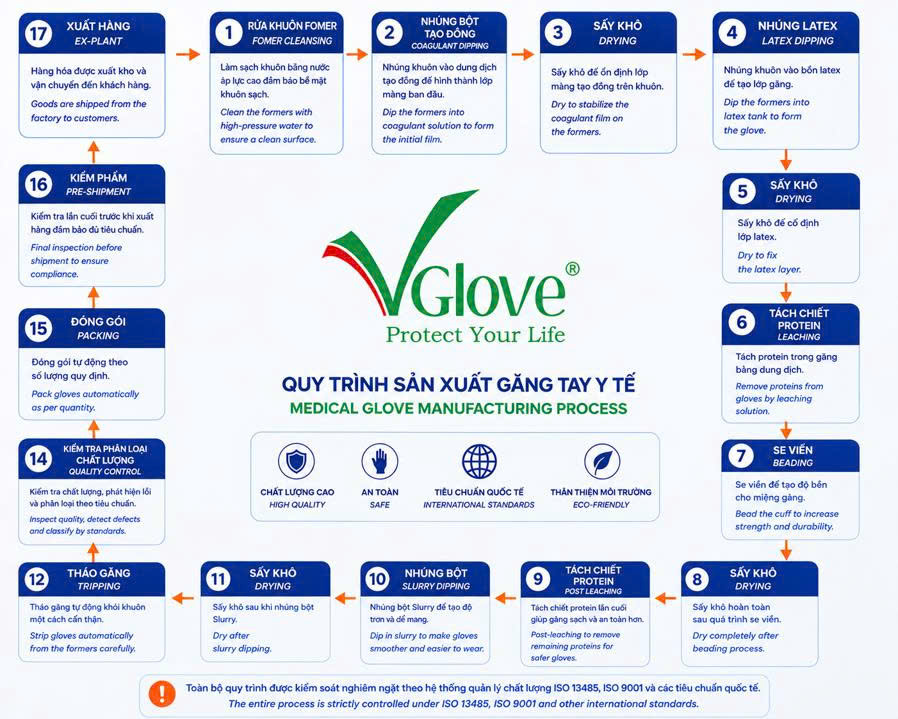
Latex Gloves Manufacturing Process
The modern manufacturing process consists of steps: cleaning the mold, dipping the mold in latex solution, vulcanizing to increase durability, surface treatment with Polymer or Chlorination, and then checking for watertightness, tensile strength, dimension and bonding before packaging.
The production process meets international standards and often applies with a strict quality management system to ensure that each shipment meets the requirements of customers and regulators.
Advantages of Latex gloves
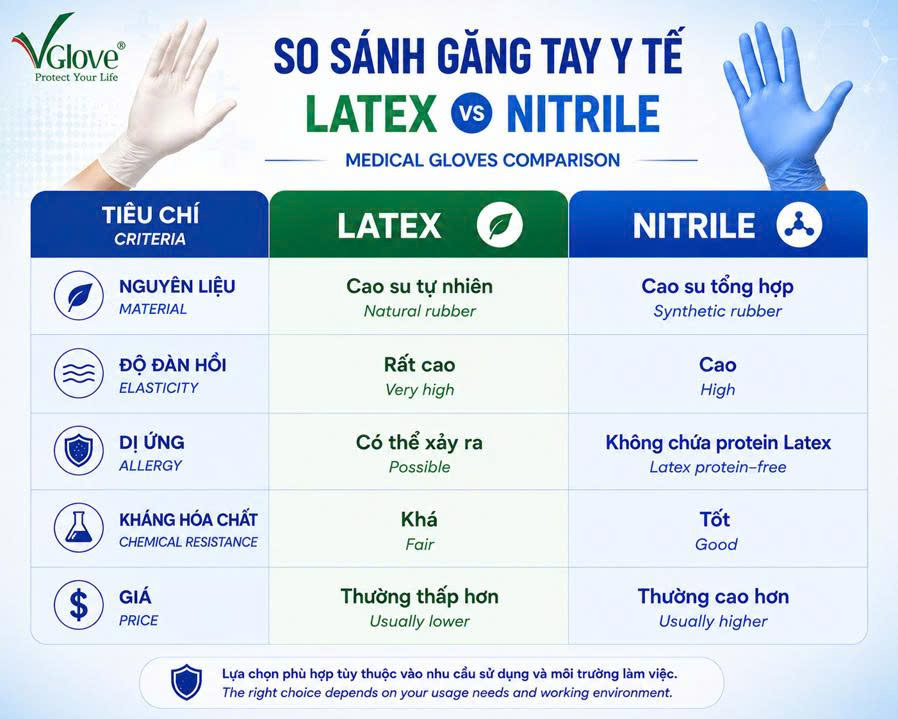
Latex gloves are famous for their high elasticity, which helps to fit the hand and reduce fatigue when used for a long time. The soft material provides a good tactile feeling, which is very suitable in the medical, dental and laboratory fields.
Additionally, Latex is quite resistant to tear in general applications and is often more competitively priced than many synthetic gloves.
Cons
The biggest drawback of Latex is the risk of allergies due to the natural proteins that still exist in the material. Although Polymer Coating or Chlorination technology can reduce the amount of protein on the surface of the gloves, they do not eliminate the risk of allergies.
Besides, latex is not the optimal choice when it comes to frequent exposure to a variety of organic solvents or harsh chemicals.
Application
Latex gloves are widely used in hospitals, clinics, dental, laboratories, food processing and many light industries. The choice of thickness, size, and surface of the glove will depend on the specific use.
Comparison of Latex and Nitrile
Standards to consider
When choosing latex gloves, businesses should prioritize products that meet EN 455, ASTM D3578, ISO 13485 and FDA requirements depending on the export market. These standards help ensure the quality, safety, and stability of the product.
· Sustainable development and environmental protection
Besides quality and protection, the factor of sustainability is increasingly becoming a criterion of concern in the selection of disposable gloves. Many medical facilities, distributors, and international businesses incorporate environmental, social, and governance (ESG) criteria as well as sustainable procurement requirements into product and supplier evaluation processes.
Grasping the trend of green economic growth to firmly integrate into the international market, VRG Khai Hoan has been taking green production and business as a strategy and competitive advantage for itself. From environmentally friendly production, methodically investing in production lines that reduce waste and emissions, applying cleaner production solutions, greening the entire supply chain and production process, to supporting social activities, joining hands for the benefit of the community. At the same time, it makes an important contribution to the implementation of climate change, directly contributing to reducing greenhouse gas emissions towards a carbon-neutral economy in the long term.
· Source of renewable materials
Latex gloves are produced from natural rubber latex, a renewable source of raw materials through the cultivation and exploitation of rubber trees. This is a notable difference from Nitrile, which is produced from Nitrile Butadiene Rubber (NBR) synthetic rubber, which is mainly based on petrochemical raw materials. However, the advantages of renewable materials need to be evaluated along with the way forests are managed, located, and the entire supply chain.
· Biodegradability
Natural rubber has a more favorable biodegradability than many synthetic rubbers under suitable environmental conditions. This is one factor that makes Latex interested in programs aimed at reducing environmental impact. However, the degradability of raw rubber should not be equated with the complete degradability of a finished pair of gloves, because the product can also contain additives and undergo many stages of processing.
Used gloves in hospitals, clinics or medical facilities must be collected and disposed of in accordance with regulations on medical waste management. Therefore, choosing Latex does not mean that it is possible to ignore the requirement for waste collection, classification and treatment.
· Carbon Footprint
Rubber trees absorb CO₂ during growth, and Latex is derived from a renewable resource. These are positive factors when considering the orientation of sustainable development. The actual carbon footprint of a pair of gloves depends on many factors, rubber cultivation and extraction, production processes, energy sources used, chemicals and packaging materials, transportation, and the entire supply chain. Therefore, an assessment based on product life cycle data (LCA) is more appropriate when businesses need to compare the environmental impact between gloves.
· Supporting sustainable procurement goals
More hospitals, distributors and international businesses are incorporating sustainability criteria into the supplier selection process. Prioritizing products with renewable raw materials, combined with the right environmental and quality management systems, can support businesses to achieve their responsible procurement goals while ensuring quality and protection requirements.
For suppliers, this is also an opportunity to be more transparent about the source of raw materials, production processes, energy management, waste, and environmental data of products. Verifiable information is more valuable than generic claims of ‘eco-friendliness’.
Conclusion
Latex remains an important material in the medical glove industry due to its elasticity, comfort, and precision handling. Choosing the right product not only improves work efficiency but also contributes to protecting the health of users.
FAQ