


Introduction
When choosing disposable medical gloves, many healthcare professionals and businesses compare Latex and Nitrile gloves. Each material offers distinct advantages depending on the intended application.
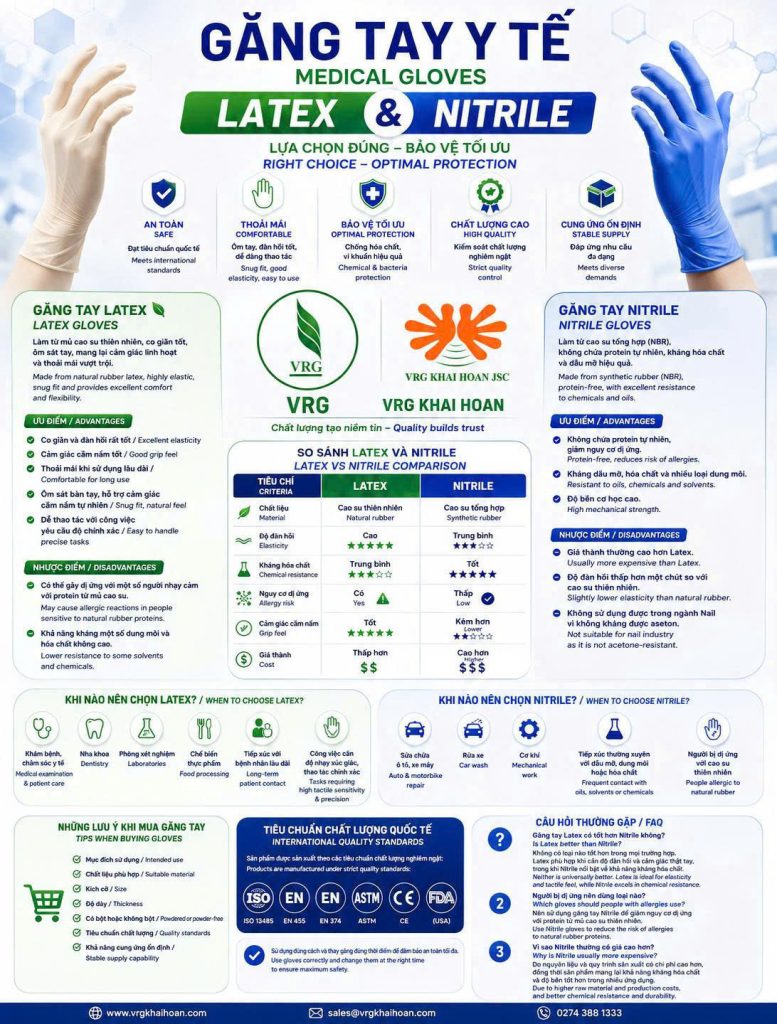
Latex gloves, made from natural rubber, are widely recognized for their exceptional elasticity, comfortable fit, and superior tactile sensitivity. Nitrile gloves, manufactured from synthetic rubber, are commonly selected when latex allergy is a concern or when increased resistance to certain chemicals is required.
Choosing the right glove depends on several factors, including the working environment, protection requirements, comfort, and the level of dexterity needed.
So, which glove is the better choice for your application? This guide explains the key differences between Latex and Nitrile gloves to help you make an informed decision.
What are Latex Gloves?
Latex gloves are manufactured from natural rubber latex. Their outstanding elasticity allows them to conform closely to the hand, providing excellent comfort, flexibility, and tactile sensitivity.
For decades, Latex gloves have been widely used in hospitals, clinics, laboratories, and other healthcare settings where precision and comfort are essential.
Advantages of Latex gloves
· Excellent elasticity and flexibility.
· Comfortable for extended wear.
· Snug fit that supports natural hand movement.
· Ideal for tasks requiring precision and fine motor control.
Limitations
· May cause allergic reactions in individuals sensitive to natural latex proteins.
· Generally, offers lower resistance to certain chemicals and solvents than Nitrile gloves.
What are Nitrile Gloves?
Nitrile gloves are made from Nitrile Butadiene Rubber (NBR), a synthetic rubber designed to provide durability and chemical resistance.
They are widely used as an alternative to Latex gloves, particularly for individuals with latex allergies or in applications involving exposure to oils, greases, or certain chemicals.
The level of chemical protection depends on the specific chemical, its concentration, exposure time, and the glove’s specifications.
Advantages of Nitrile Gloves
· Latex protein-free, reducing the risk of latex allergy.
· Good resistance to oils, greases, and many chemicals.
· Excellent puncture and abrasion resistance.
· Durable and suitable for demanding industrial applications.
Limitations
· Generally more expensive than Latex gloves.
· Slightly less elastic than natural rubber.
· Reduced tactile sensitivity compared with Latex gloves.
· Not recommended for prolonged exposure to ketone-based solvents such as acetone unless specifically tested and certified for that application.
Environmental Sustainability
Sustainability has become an increasingly important consideration when selecting disposable gloves, particularly for healthcare providers, distributors, and organizations committed to Environmental, Social and Governance (ESG) initiatives.
Renewable Resource
Latex gloves are manufactured from natural rubber latex, a renewable raw material harvested from rubber trees. Unlike petroleum-based resources, natural rubber can be replenished through responsible plantation management, supporting the long-term sustainability of the supply chain.
Nitrile gloves are manufactured from Nitrile Butadiene Rubber (NBR), a synthetic material derived primarily from petrochemical feedstocks.
Biodegradability
Natural rubber has the potential to biodegrade more readily than many synthetic rubber materials under appropriate environmental conditions. This characteristic has made Latex an increasingly attractive option for organizations seeking products derived from renewable resources.
In contrast, Nitrile gloves generally degrade more slowly because they are produced from synthetic rubber.
Regardless of the glove material, used medical gloves should always be collected and disposed of in accordance with applicable healthcare waste management regulations.
Carbon Footprint
Natural rubber is sourced from rubber trees, which absorb carbon dioxide (CO₂) from the atmosphere throughout their growth cycle. As a renewable raw material, natural rubber is increasingly recognized for its contribution to more sustainable sourcing strategies.
Nitrile is produced from petrochemical-based raw materials, and its overall carbon footprint depends on factors such as manufacturing processes, energy sources, transportation, and supply chain management.
As environmental sustainability becomes a key priority in global procurement, many buyers now evaluate not only product quality and regulatory compliance but also environmental performance when selecting disposable gloves.
Supporting Sustainable Procurement
Many healthcare institutions, distributors, and international buyers are incorporating sustainability criteria into their procurement policies. Choosing products manufactured from renewable raw materials and produced under certified quality and environmental management systems can support broader sustainability objectives while maintaining product safety and performance.
Comparison of Latex and Nitrile Gloves
|
Criteria |
Latex Gloves |
Nitrile Gloves |
|
Material |
Natural rubber latex |
Synthetic rubber (NBR) |
|
Elasticity |
Excellent |
Good |
|
Tactile sensitivity |
Excellent |
Good |
|
Chemical resistance |
Moderate |
Better for many chemicals |
|
Latex allergy risk |
Yes |
No latex proteins |
|
Comfort |
Excellent |
Good |
|
Cost |
Generally lower |
Generally higher |
When Should You Choose Latex Gloves?
Latex gloves are an excellent choice for:
- Medical examinations.
- Patient care.
- Dental procedures.
- Laboratory work.
- Food processing.
- Long-duration wear.
- Applications require excellent tactile sensitivity and precise hand movements.
Their exceptional elasticity and close fit make them ideal for tasks where comfort and dexterity are priorities, provided the user is not sensitive to natural latex proteins.
When Should You Choose Nitrile Gloves?
Nitrile gloves are commonly used for:
- Automotive repair.
- Vehicle washing and detailing.
- Mechanical work.
- Industrial maintenance.
- Handling oils, greases, solvents, and certain chemicals.
- Users with latex allergies.
When exposure to oils, greases, or specific chemicals is expected, Nitrile gloves are generally the preferred choice.
Which Glove Provides Better Protection?
Both Latex and Nitrile gloves can provide reliable protection when manufactured in accordance with internationally recognized quality standards.
Look for products that comply with standards such as:
- ISO 13485
- EN 455
- EN 374
- ASTM standards
- CE Marking
- FDA requirements (for products marketed in the United States)
Proper glove selection, correct usage, and timely glove replacement are equally important in maintaining safety and performance.
Factors to Consider When Choosing Gloves
When selecting disposable gloves, consider:
- Intended application.
- Glove material.
- Size and fit.
- Thickness.
- Powdered or powder-free.
- Compliance with international quality standards.
- Supply consistency and manufacturer reliability.
For businesses, partnering with an experienced manufacturer that maintains strict quality control and stable production capacity helps ensure a dependable long-term supply.
Frequently Asked Questions
Are Latex gloves better than Nitrile gloves?
Neither material is universally better. Latex gloves provide superior elasticity, comfort, and tactile sensitivity, while Nitrile gloves offer better resistance to many chemicals and eliminate the risk of latex protein allergy.
Which gloves are recommended for people with latex allergies?
Nitrile gloves are recommended because they do not contain natural latex proteins.
Why are Nitrile gloves usually more expensive?
Nitrile gloves generally have higher raw material and manufacturing costs and offer enhanced durability and resistance to many industrial chemicals.
Conclusion
Both Latex and Nitrile gloves are reliable choices when selected for the appropriate application. Each material offers distinct advantages depending on the working environment, protection requirements, and user preferences.
Latex gloves remain the preferred choice for many healthcare professionals due to their exceptional elasticity, superior tactile sensitivity, and outstanding wearing comfort. In addition, as they are manufactured from natural rubber—a renewable raw material with the potential for biodegradation under appropriate conditions—Latex gloves are increasingly recognized as an option that supports sustainability initiatives and responsible sourcing.
Nitrile gloves are better suited for applications involving exposure to oils, greases, or certain chemicals, as well as for users with latex allergies.
As global industries place greater emphasis on product performance, regulatory compliance, and environmental responsibility, selecting the right disposable glove involves considering not only protection and comfort but also long-term sustainability. By evaluating application requirements, quality standards, and environmental considerations, businesses and end users can make informed decisions that best meet their operational and sustainability goals.